


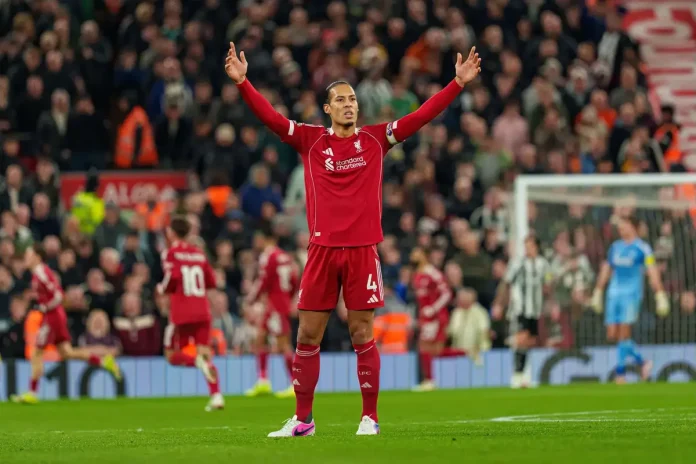
Virgil van Dijk, the iconic captain of Liverpool, made strong statements about the role of former players who have become sports commentators, highlighting their “responsibility” towards the new generations of footballers. During a revealing conversation with Gary Neville, a former champion with Manchester United, Van Dijk expressed concern about how the opinions of analysts can affect the mental health of younger players. “I think former players have a duty of responsibility to the new generation,” said the central defender, directly criticizing the “clickbait” culture that has proliferated on social media.
The Dutch international did not hesitate to state that, while he can handle criticism, he fears that young players are more vulnerable to this type of pressure. “For me, personally, I can deal with it, but I am a little worried about the next generation,” Van Dijk lamented. This is not the first time the player has addressed this issue; in November, he had already criticized Wayne Rooney for describing the lack of leadership at Liverpool as a “lazy criticism.”
The pressure on young athletes is exacerbated by the toxic environment of social media, where negative comments can have a devastating impact. “What I see is that when a young player has a good game, they look for the good reviews. However, after a less convincing performance, the wave of criticism and bullying on social media can affect them deeply,” Van Dijk warned. The concern is valid, especially in a scenario where digital platforms are increasingly dominated by extreme and provocative opinions.
The conversation was not limited to his experiences; Van Dijk also referenced the incendiary comments made by Paul Scholes and Nicky Butt about Lisandro Martinez, a player for Manchester United. Before the Manchester derby, Butt suggested that City’s forward, Erling Haaland, would treat Martinez like a “little boy,” while Scholes implied that Haaland would “throw him into the net” after scoring. In response, Martinez defended himself, stating that commentators can “talk on television,” but “no one says anything” face to face.
With the growing influence of social media, Van Dijk warned that the situation may only worsen: “It’s an issue that needs attention, as today’s platforms, with clickbait and sensationalist headlines, are everywhere.” He concluded that former players who have faced similar challenges have a moral obligation to protect young talents from the undue pressure they face.
With a firm voice and the experience of a leader, Van Dijk makes a plea for common sense, urging commentators to be more mindful of their words and the impact they can have on athletes’ mental health. The future of football depends not only on skills on the pitch but also on how society treats those who play it. It is a call to responsibility that should not be ignored.
Discover more from Apito Final
Subscribe to get the latest posts sent to your email.

