


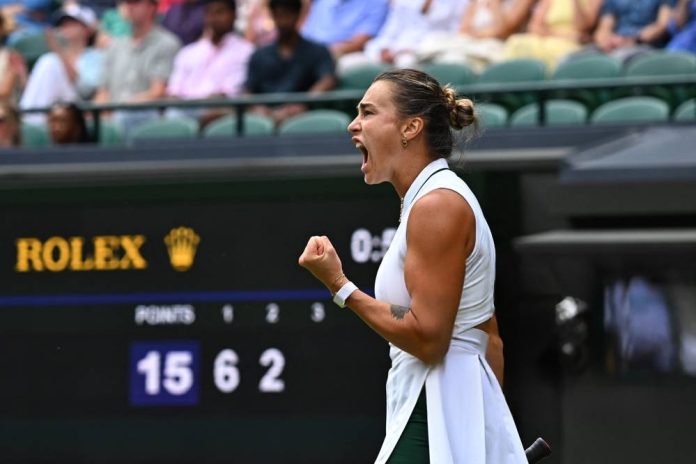
Aryna Sabalenka continues to establish herself as one of the top contenders for the title at Wimbledon. The world number one delivered a solid and extremely consistent performance on Centre Court, defeating Latvian Jelena Ostapenko 6-4, 6-4 in the third round of the women's singles tournament and securing her place in the round of 16.
The result may suggest a relatively straightforward victory, but the numbers reveal a clash between two very distinct playing styles, where Sabalenka's discipline and consistency ultimately prevailed over Ostapenko's characteristic aggression. The world number one clearly dominated in service, recording nine aces compared to just four from her opponent, and landing 66% of her first serves in play, compared to 57% for the Latvian player. This effectiveness allowed her to win 71% of the points played on her first serve, maintaining control of the match at crucial moments.
The most revealing statistic, however, came in the number of unforced errors. Sabalenka made only six unforced errors throughout the two sets, a remarkable record against an opponent known for the intensity and high risk of her offensive tennis. Ostapenko, on the other hand, finished the match with 18 unforced errors, a natural consequence of her extremely aggressive playing style, which allowed her to hit 27 winners compared to Sabalenka's 19, but ultimately cost her dearly at the decisive moments.
Despite the defeat, Ostapenko was able to stand out in some indicators. The Latvian was much more aggressive at the net, winning seven of the eleven points contested in that area, while Sabalenka secured only three out of ten. The 27 winners also demonstrate the offensive capability of the 2017 Roland Garros champion. However, the main difference between the two was in risk management. While Ostapenko constantly played on the edge, Sabalenka effectively controlled the match, converting four of the eleven break points she had and allowing her opponent only two service breaks out of four opportunities.
The total number of points won also shows that the match was more balanced than the final result might suggest. Sabalenka won 68 points, compared to 60 for Ostapenko. The Latvian forced the world number one to maintain a high competitive level throughout the match and never allowed her to settle into a comfort zone. However, whenever decisive moments arose, it was Sabalenka who demonstrated greater solidity, capitalizing on opportunities and avoiding giving away easy points through unforced errors.

O MUNDIAL 2026 VIVE-SE COM A LEGO
With this victory, Aryna Sabalenka extends a campaign at Wimbledon that continues to gain momentum. The world ranking leader enters the tournament's second week with an extremely effective serve, a high level of confidence, and an impressive ability to reduce errors, precisely the factors that typically distinguish the top title contenders on the grass of the All England Club.
Power has always been a characteristic of Sabalenka. This time, however, she demonstrated once again that she can combine that strength with high emotional and tactical control, making her an extremely difficult opponent for any player still in the tournament.
The round of 16 is already secured, and based on her performance against Jelena Ostapenko, Aryna Sabalenka sends a clear message to the other contenders: she arrived at Wimbledon in excellent form and remains firmly determined to fight for the title.
AGORA PODE ACOMPANHAR O MUNDIAL DE FUTEBOL COM TODA INFORMAÇÃO – AQUI
Discover more from Apito Final
Subscribe to get the latest posts sent to your email.

