


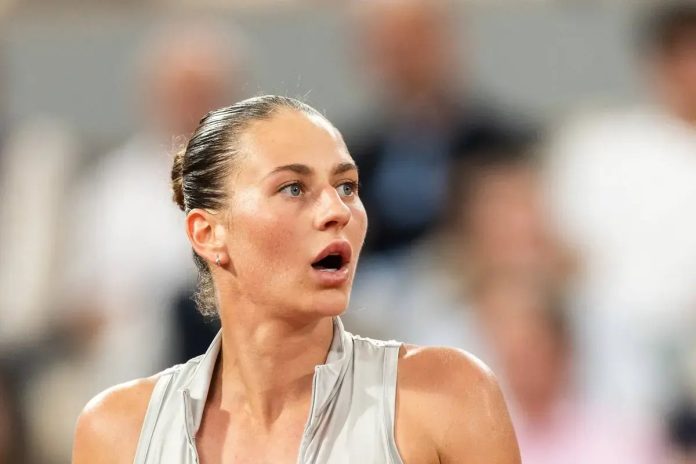
Marta Kostyuk is not only surprising on the courts of Roland Garros with an impressive streak of 17 consecutive victories that has placed her in the semifinals, but she is also igniting the political and moral debate surrounding the war in Ukraine and the uncomfortable silence of Russian athletes. The young Ukrainian tennis player did not hesitate to turn the press conference into a stage where she launched scathing criticisms of the stance of her Russian opponents and the harsh reality she faces as a representative of a country in conflict.
Her victory over Elina Svitolina secured her a spot among the tournament’s top four, where she will face Russian prospect Mirra Andreeva. However, Kostyuk did not limit her comments to the match. From the very beginning, she diverted attention from her sporting achievements to denounce the profound structural and moral differences that define Ukrainian sports compared to Russian sports, at a time when the war dictates the pace of her life and the careers of her compatriots.
The currently 15th seed revealed the constant pressure that Ukrainian athletes face: “Most Ukrainian athletes return home to train. They do not have the privilege that I have of traveling constantly and being out of danger. So, they train in the midst of war, live that reality, and competing like that is another level.” This statement is not just a recounting of difficulties; it is a call to awareness about what it means to represent Ukraine in times of war.
Marta does not hide that the sporting result is secondary to the weight of national responsibility: “Being here is a true blessing and I’m not thinking about winning. That’s not the most important thing for me. I’m here to represent Ukraine and to enjoy.” This statement reveals the human and patriotic dimension that her participation in the tournament assumes.
Regarding the imminent clash with Mirra Andreeva, the young Ukrainian is clear: on the court, she makes no distinctions. “Normally, I never care who is on the other side of the net. I’m there to play tennis and do my job, and that won’t change.” But outside the four lines, her discourse becomes more fierce and critical. Marta does not understand the silence of Russian players in the face of the invasion and the suffering of her country: “They are all adults, they know what is happening, they have mobile phones, Instagram, news, they are clearly aware. I wish they would take a clearer stance on what is happening, especially when your country is killing other people.”
Kostyuk challenges the passivity of Russian athletes and reminds them that there are various ways to protest: “If you disagree, there are ways to act. There are public figures who have done it. There is a way to, you know, not live there. After four years, I think it is clear which side they are on. That is their burden, not mine.” A direct appeal to the moral responsibility that comes with public visibility in sports.
This intervention positions Marta Kostyuk not only as a rising star in world tennis but also as a courageous voice that uses her place on the podium to denounce a war she did not choose, but which defines her. Her struggle transcends the court and imposes an urgent reflection on the role of athletes in the face of geopolitical conflicts — a theme that promises to mark her career and the future of sports itself.
This article first appeared on Apito Final.
NOW YOU CAN FOLLOW THE WORLD CUP WITH ALL THE INFORMATION – HERE
Discover more from Apito Final
Subscribe to get the latest posts sent to your email.

