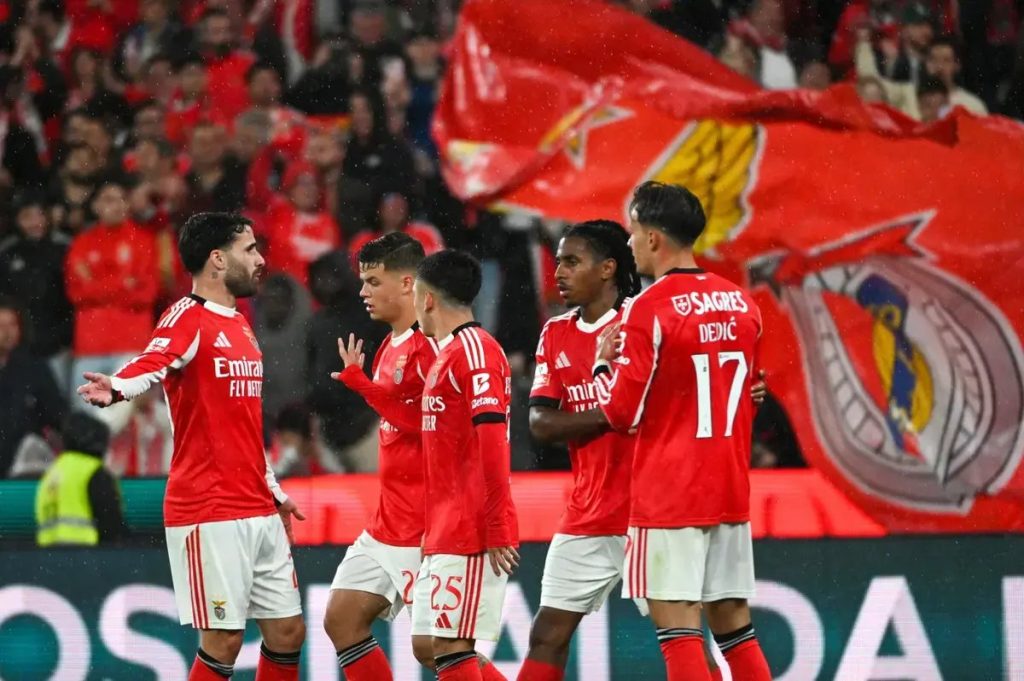
The public recognition by the Portuguese Professional Football League of the decisive influence of Benfica in the centralization of audiovisual rights is stirring the behind-the-scenes of national football. At a time when the major clubs are competing not only for titles but also for power off the pitch, the statement that “Benfica’s contribution is undeniable” surprises even the most observant of the I Liga’s executive chess game, underscoring the negotiating weight of the reds even after the departure from the Board of the Centralization League.
André Mosqueira do Amaral, executive director of the LPFP, publicly stated this Friday that throughout the negotiation process for the centralization of television broadcasting rights, Benfica was always “informed of everything that was happening,” maintaining a close relationship with the officials of the Lisbon club. Despite having withdrawn from the centralizing body, the Reds were never left out of discussions, and according to Mosqueira do Amaral, “they also participated in the design of the solutions, like the other sports societies.” This approach, the leader assures, was extended to all clubs, regardless of their position in the process, highlighting an effort for transparency and inclusion on the part of the League.

*The World Cup is experienced with LEGO*
[THE 2026 WORLD CUP IS EXPERIENCED WITH LEGO](https://www.lego.com/pt-pt/categories/football/football-gifts-toys)
The centralization of audiovisual rights represents one of the most profound revolutions in Portuguese football in recent decades, with a direct impact on the financial competitiveness of clubs and the attractiveness of the league. Until now, the main clubs negotiated their broadcasting contracts individually, perpetuating glaring inequalities between the big teams and the others. The new model, set to take effect in 2028, proposes a more equitable distribution of revenues and aims to align Portugal with the best practices of major European leagues. In this context, the active involvement of Benfica becomes even more relevant, as the club has just secured an individual agreement for the next two seasons worth €104.6 million, a record amount that establishes a new benchmark for the national market.
In statements to the Lusa agency, André Mosqueira do Amaral emphasized: “We have always been rigorous in sharing with Benfica everything that was happening, what was being worked on, and also sharing our vision. […] We have always done this by being close, sharing, and, indeed, also receiving contributions from Benfica, even when not centralized.” The official further reinforced that “Benfica also participated in the design just as other sports societies did, and it could not be otherwise,” highlighting that respect for the autonomy of clubs has always been the priority of the League.
When questioned about the impact of Benfica’s recent sale of television rights, Mosqueira do Amaral was unequivocal: “I would say that having individual parts that are appreciating only means that the whole must also be valued. Therefore, for us, these market indicators are very positive, super positive. If it were the other way around, it would be frightening. Being in the right direction, they are very positive, obviously.” These words make it clear that the appreciation of individual agreements of major clubs can serve as a lever for a global enhancement of the League product, strengthening the negotiating position of Portuguese clubs with national and international operators.
Despite the heated rivalry between the club presidents, Mosqueira do Amaral assures that, within the LPFP, the atmosphere is “collegial, constructive,” as evidenced by the vote on the distribution of funds. “It was indeed at a level of elevation that is even difficult to find in other industries,” the official stated, highlighting the sense of collective responsibility demonstrated by the clubs during negotiations.
The newly approved distribution model is based on five main criteria: 57.5% of the total amount will be allocated based on sporting merit — final position in the championship, historical rankings, and UEFA ranking — 20% will be divided equally among all clubs, and 17.5% will take into account average attendance at stadiums and television viewership. These criteria aim to reward performance and the ability to mobilize fans, encouraging all participants to invest in competitiveness and entertainment.
With the implementation of centralization starting in 2028, Portuguese clubs will finally have the opportunity to compete under more balanced financial conditions, which could translate into a more unpredictable and attractive league for sponsors and fans. The active influence of Benfica in this process could be crucial in ensuring that the model is genuinely beneficial for the entire ecosystem of national football. The focus now shifts to how clubs will adapt their strategies and the immediate impact that new individual contracts, such as Benfica’s, will have on the overall negotiation of Portuguese television rights. One thing is certain: the race for control of the future finances of Portuguese football is heating up, and no one wants to be left behind.
NOW YOU CAN FOLLOW THE WORLD CUP WITH ALL THE INFORMATION – HERE
Discover more from Apito Final
Subscribe to get the latest posts sent to your email.