


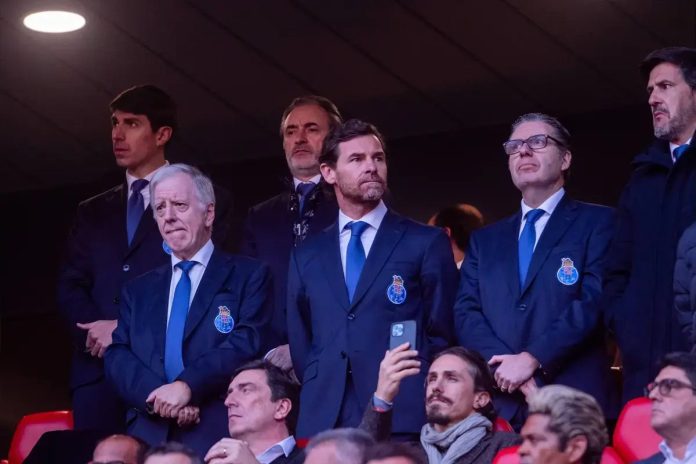
André Villas-Boas issues a genuine red alert to world football: illegitimate and obscure practices continue to tarnish the development of young talent, and the case of young Cardoso Varela is the most blatant proof of this. In an explosive interview with the German newspaper Kicker, the president of FC Porto does not hold back in his criticism and denounces what he considers a calculated scheme to circumvent FIFA rules and profit at the expense of minors — a scandal that promises to shake the foundations.
Villas-Boas reveals that the transfer of Varela to the modest Croatian amateur club NK Dínamo Odranski Obrez was not a mere coincidence, but rather a maneuver with clear and concerning objectives. “First, to distance the player from FC Porto without the club receiving any financial compensation,” he explains. The second step, he adds, would be “to place the young player as quickly as possible in a top club, probably in one of the five major European leagues.” This method, which may seem legal on the surface, conceals a carefully crafted strategy to circumvent Article 19 of FIFA’s regulations, which protects minors in international transfers.
The leader of the Dragons highlights the strangeness of a talent developed at FC Porto moving to a club with no history or conditions that justify the transfer, emphasizing that there is no genuine connection of the player’s family to Croatia. Even with the suspicion from both the Portuguese and Croatian federations that it was a “bridge transfer,” FIFA ultimately authorized the move as soon as the athlete turned 16, limiting FC Porto’s ability to intervene.
Villas-Boas does not hesitate to unveil the behind-the-scenes of the operation: Varela’s father secured a job at a local company that, according to the president, is linked to a friend of the businessman now representing the player. The situation becomes even more complicated with the existence of a power of attorney signed by the family years ago, which transfers the powers of representation and custody to Wilson Sardinha — a businessman who, according to Villas-Boas, used this authorization to present Varela to several clubs and ensure his departure from FC Porto in exchange for high commissions.
“Very high commissions were promised to Sardinha for the transfer of the minor, amounts that FC Porto would never pay,” Villas-Boas claims, making clear the suspicious and lucrative nature of this scheme. The club sees in this case a pattern of illicit maneuvers, often associated with Croatian clubs that serve as a springboard for young talents towards the major leagues, thus circumventing international regulations on the transfer of minors.
The controversy intensifies with suspicions that the player’s father received or was promised a commission for the operation, based on his professional connection to a printing company owned by a friend of the intermediary businessman. Curiously, throughout the entire period that Varela was at the amateur club, the father never appeared at the facilities, and the young player never mentioned his presence, raising even more doubts about the authenticity of the transfer.
This case is not just an isolated incident, but rather a serious warning for all stakeholders in football: the abuse and exploitation of young players continue to be a hidden reality, camouflaged by complex schemes and obscure financial interests. Villas-Boas calls for urgent intervention from football authorities — UEFA, FIFA, and the Portuguese Football Federation — to put an end to these illegal practices that harm not only the training clubs but also the developing talents themselves.
FC Porto will not back down and promises to continue denouncing these machinations that threaten the future of youth football worldwide. The fight against “bridge transfers” is now a priority to ensure that talent is protected and not turned into a bargaining chip for profitable schemes at the expense of minors.
This is a case that involves much more than a simple transfer: it is an ethical and legal battle that reveals the shadows behind modern football and challenges all institutions to act with firmness and transparency. The future of Cardoso Varela and so many other young players depends on it.
This article first appeared on Apito Final.
Discover more from Apito Final
Subscribe to get the latest posts sent to your email.

