


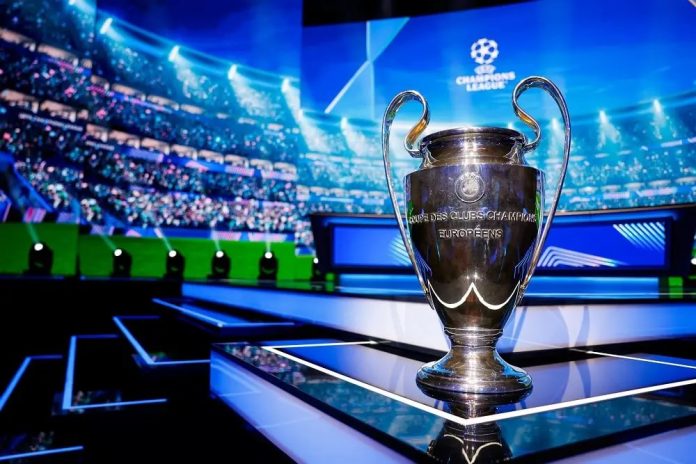
Total shock in the elite of European football: the UEFA refuses to yield to the controversy over hydration breaks and announces that the Champions League will continue without regular interruptions, even with FIFA imposing this measure for the 2026 World Cup. While the main global bodies clash over how to protect – or not – the players, UEFA remains steadfast in defending the frenetic pace that makes the Champions the most electrifying stage on the planet.
The decision was communicated this Wednesday to the German broadcaster ARD, with UEFA assuring that “water breaks in the Champions League would only occur in unusual situations of extreme temperatures.” Unlike the decision by FIFA, which mandates that all matches in the upcoming World Cup in the United States, Mexico, and Canada have stoppages in the middle of the first and second halves due to high temperatures and the alleged well-being of athletes, UEFA rejects any changes to the current regulations. It is noteworthy that even the German federation has stated that matches will only be interrupted if the heat demands it, aligning its position with that of the European governing body.
*The World Cup is experienced with LEGO*
[THE 2026 WORLD CUP IS EXPERIENCED WITH LEGO](https://www.lego.com/pt-pt/categories/football/football-gifts-toys)
The controversy deepens as these interruptions, imposed by FIFA, have been strongly criticized by coaches, players, and fans. It is claimed that these breaks serve not only to hydrate the athletes but are also exploited by the coaches to give technical instructions and tactically adjust the game, which disrupts the flow and excitement. Even more scandalous: even in stadiums with roofs and air conditioning, the stoppages are implemented, raising legitimate doubts about whether the true motive is the health of the players or merely another opportunity to fit in television advertising. Suspicion is growing behind the scenes of world football, and many are already speaking of “theatre” for the benefit of audiences.
The president of the English Football Association, Mark Bullingham, resorted to irony when asked about the possibility of replicating the model at Euro 2028, which will take place in the British Isles. “With the traditionally low temperatures in the region, it would be, at the very least, ridiculous to have to stop for hydration,” commented Bullingham, emphasizing the lack of practical sense in the blind application of this rule. This stance further reinforces FIFA’s isolation in its regulatory crusade, while exposing the gap between the real needs of athletes and commercial interests.
The context of this decision is particularly relevant in the current landscape of international football. The increasing scheduling of matches and the rise in global temperatures force sports authorities to constantly reassess playing conditions. However, UEFA, by remaining inflexible, conveys a clear message: the essence of the Champions League will not be sacrificed for the sake of parallel interests or occasional experimentation. The European body is committed to preserving competitive integrity and refuses to accept “tactical stoppages” disguised as medical concerns.
For clubs, coaches, and players, this decision is a true turning point. Those competing in the Champions League know they cannot count on breaks to reorganize the team or refresh tactical ideas mid-battle. The impact is immense, especially for coaches who saw these stoppages as a new strategic tool. On the other hand, fans are grateful: fewer interruptions, more excitement, more pure football.
What can we expect moving forward? UEFA is launching its own challenge to FIFA, in a quiet war for control over the major decisions in world football. It is expected that this stance will influence other bodies and competitions, creating an important precedent for the future of the rules of the game. The debate is far from over, and the upcoming seasons promise even more controversy and confrontation between the different views on what top football should be. For now, the message is clear: in the Champions League, those who want to refresh themselves will have to do so by chasing after the goal – not by relying on enforced stoppages.
NOW YOU CAN FOLLOW THE WORLD CUP WITH ALL THE INFORMATION – HERE
Discover more from Apito Final
Subscribe to get the latest posts sent to your email.

