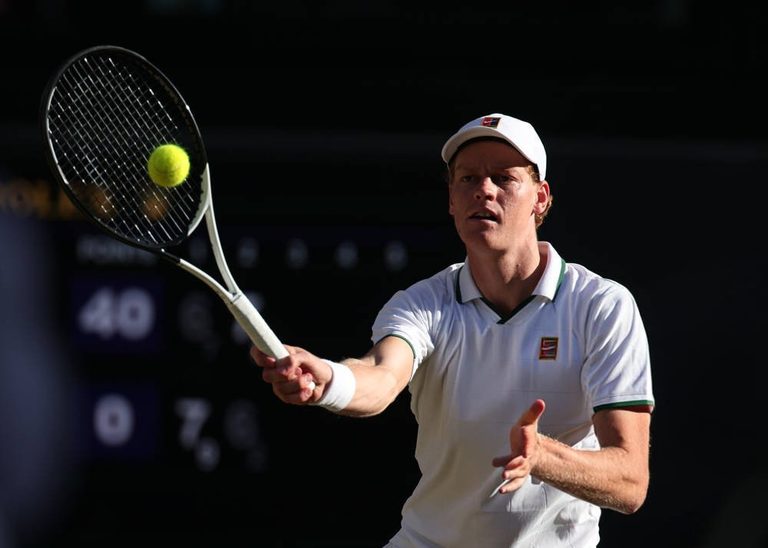
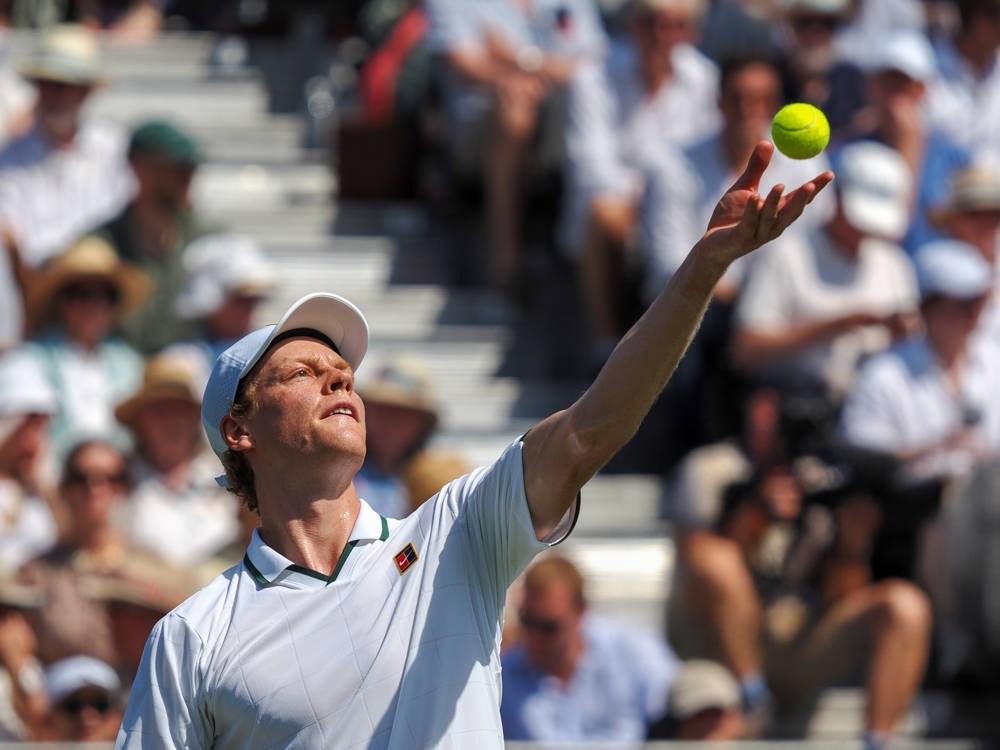
Jannik Sinner is about to benefit from one of the most controversial and anticipated changes to the tennis calendar: Wimbledon has finally introduced a rule for breaks during extreme heat, a measure that could be crucial for the current world number one, known for his struggles in high temperatures. With the UK experiencing a rare heatwave, with temperatures surpassing 30 degrees, the stage of the most traditional Grand Slam on the circuit is adapting to the 21st century to protect athletes, in a decision that promises to shake up the competition in 2026.
The Italian tennis player, who leads the ATP ranking, has faced real nightmares whenever the temperature rises. In 2025, Sinner won Wimbledon for the first time, but his relationship with the heat has been a rollercoaster: in Shanghai last year, he was forced to retire due to cramps in humid conditions; at the Australian Open this year, he narrowly avoided elimination against Eliot Spizzirri, only recovering after the roof was closed due to the heat index. More recently, he suffered a surprising defeat to Juan Manuel Cerundolo in the second round of Roland Garros, clearly affected by the scorching temperatures. Now, Sinner finally recognizes the need for specific measures at Wimbledon, where the heat can become a true additional opponent.

THE 2026 WORLD CUP IS EXPERIENCED WITH LEGO
The new rule, announced by the All England Club for the 2026 tournament, stipulates a mandatory 10-minute break between the second and third sets in best-of-three matches, and between the third and fourth sets in best-of-five matches, whenever the thermal stress index reaches or exceeds 30.1°C. However, this break will only be activated at the request of one of the players, which raises questions about potential strategies and controversies. Furthermore, the measure does not apply to matches played under a closed roof, nor to doubles matches, and is also excluded for matches resumed after a night suspension, in an attempt to avoid further congestion in the already tight tournament schedule.
Reactions to the introduction of this rule were swift. When questioned about the new regulation, Sinner was emphatic: “I have struggled a lot with the heat throughout my career, so it’s good to see that Wimbledon is attentive to the well-being of players. Every minute of pause can be the difference between winning and collapsing on the court.” The Italian also admitted, in statements to the tournament’s official channel, that “extreme conditions require protection, especially when matches can last more than three hours on grass, a surface that is very physically demanding.” These words reinforce the perception that for Sinner, and for other athletes sensitive to heat, the British Grand Slam may become fairer and more balanced.
For the tournament, this decision represents not only a response to rising temperatures in the UK—an increasingly frequent phenomenon due to climate change—but also a sign of modernization in tennis. While some applaud the attention given to the health of athletes, others fear that this flexibility could generate controversy: it only takes one player to request a break to completely alter the course of a match, which could even be used as a tactical tool. The lack of application in doubles or in indoor matches is also generating perplexity among fans and experts.
In the coming weeks, all eyes will be focused not only on Sinner’s performance, as he seeks to defend his title and cement his dominance on the circuit, but also on the practical implications of this new rule. Will the Italian be able to take advantage of the change to overcome physical difficulties and remain on the throne? The tennis world is preparing to assess whether this measure is a triumph for sports justice or merely another source of controversy and heated debates. One thing is certain: Wimbledon will never be the same again, and Sinner is grateful.
NOW YOU CAN FOLLOW THE WORLD CUP WITH ALL THE INFORMATION – HERE
Discover more from Apito Final
Subscribe to get the latest posts sent to your email.