


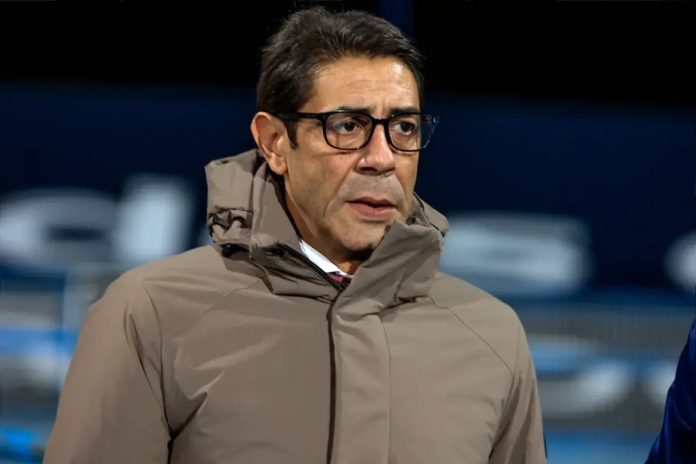
Benfica is going through a decisive moment under the leadership of Rui Costa, who, with a strategic vision, seems to be shaping the future of the club in an innovative and promising way. With the recent renewals of Anísio Cabral and Daniel Banjaqui, and the imminent confirmation of the extension of José Neto’s contract, good news keeps coming to Luz. These moves are not only a reflection of the intrinsic quality of these young talents but also a clear demonstration of the president’s intention to optimize the club’s sports management.
Anísio, Banjaqui, and Neto are names that have already earned the coach’s trust, having proven their worth in the first team. However, it is essential to remember that in the world of football, the rise to the top can be fleeting. Benfica has a history filled with cases where promises did not meet expectations. Therefore, the renewals must be accompanied by a solid investment in the potential of these players.
The question that arises is: what do these renewals mean for Benfica’s immediate future? The answer is simple: a return to the training strategy. With the presence of a technical structure that values young players, and with the possibility of a heavyweight name like Mourinho on the horizon, the expectation is that Anísio, Banjaqui, and Neto will be effectively integrated into the squad by 2026/27. This change could mark the end of the era of “emergency scouting,” where rushed and costly signings became the norm.
Moreover, the inclusion of these young talents in the first team could mean a drastic reduction in expenses, especially at a time when participation in the Champions League is at risk. Each spot occupied by a Neto or a Banjaqui represents significant savings, reducing the need for heavy investments in foreign players, whose qualities remain to be proven, such as in the case of Issa Kaboré and Jan-Niklas Beste. It is an opportunity to transform the talent produced in Seixal into homegrown capital, allowing the transfer budget to be used only on signings that bring real impact.
However, for this strategy not to be just a façade, it is crucial that these young talents are treated as valid options and not mere alternatives. The time when young players were only called up for training needs to be left behind. If Banjaqui and the others end up spending games on the bench, their value will be in constant depreciation, and motivation can quickly evaporate. The coach needs to have the courage to integrate them not just in emergency situations but as part of a conscious management of the squad and the continuous development of these players.
Rui Costa has held onto young talent, resisting approaches from European clubs, but the true test will be their evolution on the pitch. If the strategy is implemented effectively, Benfica’s future may very well lie at home, in the promises that are preparing to shine under the lights of the Estádio da Luz. What is at stake is not just the next season, but the very identity and sustainability of the club.
This article first appeared on Apito Final.
Discover more from Apito Final
Subscribe to get the latest posts sent to your email.

