


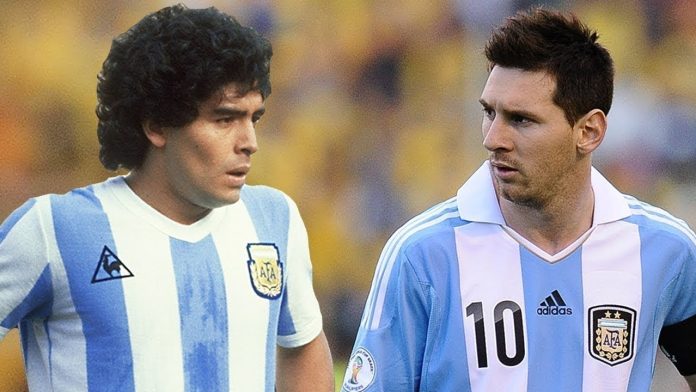
The history of the Argentine national team in the World Cup is marked by dramatic episodes, controversial decisions, and moments of pure genius that have redefined not only the identity of Argentine football but also the very course of the most important competition on the planet. From near glory to absolute redemption, through technical decisions that shocked an entire nation and continue to fuel debates today, there are five moments that have been etched in the collective memory of the sport and continue to inspire generations.
Argentina, a three-time world champion (1978, 1986, and 2022), has always been more than just titles. It has been the birthplace of two incomparable legends – Diego Armando Maradona and Lionel Messi – whose feats in the World Cup have surpassed everything that was previously thought possible. However, the epic journey of the Albiceleste in the tournament is marked by moments that defined not only their path but also the very meaning of representing a country on the field. From dramatic finals to technical decisions that changed the course of Argentine football, the decisive episodes multiply, cementing Argentina’s reputation as one of the most fascinating national teams in world football.
O MUNDIAL 2026 VIVE-SE COM A LEGO
The first significant chapter dates back to 1930, when Guillermo Stábile, already the tournament’s top scorer, was inches away from restoring hope for Argentina in the inaugural World Cup final against Uruguay. With the team trailing 3-2, Stábile hit the crossbar, in a moment that could have changed the course of history. Had that ball gone in, Argentina would have equalized and perhaps clinched their first World title. Instead, Uruguay extended their lead through Héctor Castro, a legendary player who competed with only one arm, and sealed the victory. This moment, marked by frustration and the feeling of being so close to glory, became symbolic of what would be Argentina’s fate for decades: a team full of talent, but that so often faltered at crucial moments.
Decades later, in 1974, Argentina would once again experience a deep disappointment. Despite reaching the second group stage (equivalent to the current quarter-finals), Vladislao Cap’s team succumbed humiliatingly to the Netherlands, led by Johan Cruyff, losing 4-0. This result, in addition to being painful, served as a catalyst for the transformation of Argentine football. The presidency of the Argentine Football Association (AFA) passed to David Bracuto, and the technical leadership was handed over to César Luis Menotti, who imposed an unprecedented condition: Argentine players under the age of 25 could not be sold abroad. This new organizational and technical paradigm laid the groundwork for an internal revolution that would bear fruit a few years later.
The 1978 World Cup, held on Argentine soil, would forever be marked by a controversial decision. César Luis Menotti, already established as the national team coach, decided to exclude Diego Maradona, then an emerging teenage star, from the final squad. Although he had given the young prodigy his international debut, Menotti believed that, at 17 years old, Maradona was not yet ready to handle the pressure of a World Cup at home. “It was a difficult decision, but the responsibility was too great for a 17-year-old kid,” Menotti justified at the time, in the face of outrage from fans and the press. The bet on experience ultimately proved decisive: Argentina became world champions for the first time, dispelling any immediate doubts about Maradona’s absence.
This trio of moments demonstrates how Argentina’s history in the World Cups is made up of both glories and falls, bold decisions, and unexpected turns. The impact of these events was felt far beyond the pitch – they changed the management of Argentine football, influenced training policies, and shaped the competitive spirit of the national team. Maradona himself, years later, admitted: “Being left out in 1978 gave me more strength to fight and show the world what I could do” – a statement that would be realized in an epic way at the 1986 World Cup, where he became an absolute legend.
Looking back, it is clear that each of these moments not only defined fundamental stages of Argentina’s journey but also paved the way for future achievements. With Argentina once again entering the ranks of favorites for upcoming World Cup editions, it remains to be seen what new chapter will be written. One thing is certain: the South American nation will continue to be synonymous with passion, drama, and unpredictability on the grand stages of world football.
NOW YOU CAN FOLLOW THE WORLD CUP WITH ALL THE INFORMATION – HERE
Discover more from Apito Final
Subscribe to get the latest posts sent to your email.

