


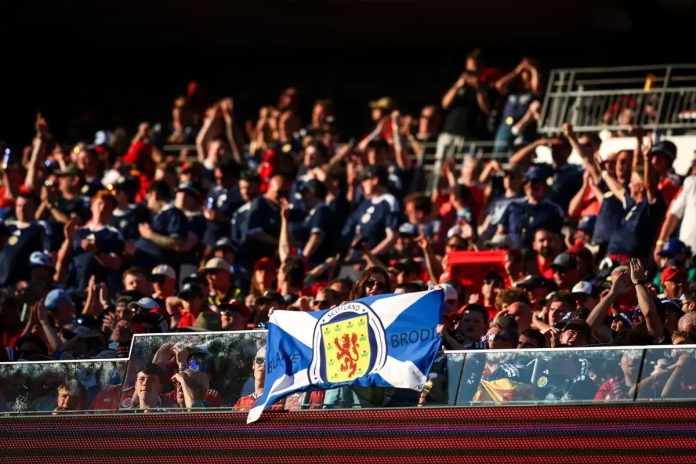
Scotland is virtually out of the 2026 World Cup, with a minimal probability of just 0.07% of advancing to the knockout stage, following a crushing 3-0 defeat to Brazil. The situation, which was already dire after a 1-0 loss to Morocco and a narrow victory over Haiti, has now become almost impossible for the Scots, forcing them to rely on a surreal combination of results in tonight’s matches to keep their dream alive.
The team led by Steve Clarke currently occupies 10th place in the ranking of the 12 third-placed teams, a position that, at first glance, is insufficient to guarantee progression to the next stage. With only one day remaining in the group stage, Scotland needs genuine miracles: to move up at least two places, provided that other teams stumble in specific and unlikely ways in their matches.
The World Cup is experienced with LEGO.
What has gone wrong for Scotland so far? Aside from the heavy defeat against Brazil, which the Scots themselves acknowledge as a self-inflicted disaster, the combination of the other results has not helped. The qualification chances, which were only at 5% just 24 hours ago, have sunk further after unfavorable outcomes in other groups. Yesterday, of the four essential scenarios, only two came to fruition: Uruguay lost 1-0 to Spain, but Senegal convincingly defeated Iraq, climbing to 5th place in the ranking of third-placed teams and pushing Scotland further down. The 1-1 draw between Egypt and Iran was also a cold shower for the Scots, further diminishing their options.
For the miracle to happen tonight, Scotland needs Ghana to defeat Croatia by at least three goals, something that seems difficult considering the defensive stance of the Ghanaians in their previous match against England. Additionally, Algeria, another team with a better record than Scotland, must lose by two goals to Austria, or win by four, a double scenario that leaves the Scots in a precarious position. As if that weren’t enough, the Democratic Republic of Congo cannot secure qualification for the knockout stage for the first time in its history – for that, Uzbekistan, already eliminated and with poor performances so far, cannot lose by more than two goals.
Faced with this genuine puzzle, Scotland’s presence in the knockout phase is practically dependent on an unprecedented combination of results, which explains the negligible percentage of hope in the stands. The coach Steve Clark himself, after the defeat to Brazil, acknowledged the gravity of the situation: “We knew it was a decisive game, but we didn’t rise to the challenge. Now we have to wait and believe, because in football anything can happen,” he stated at the press conference.
Scottish fans, the famous Tartan Army, are experiencing hours of tension and disbelief. Many already believe that the return to the World Cup after 28 years is about to end in the most bitter way possible, while others cling to a thread of hope. The impact of this situation goes far beyond national pride: early elimination could jeopardize the national team’s renewal project, weaken Steve Clark’s position, and force the Scottish Football Association to rethink strategies for future international campaigns.
What comes next? Tonight will be one of absolute nervousness, with all eyes on three matches that could determine Scotland’s immediate future in the World Cup. If the miracle does not happen, the team will return home with their heads held low, but with the certainty that the bar will be set even higher for 2030. If, against all odds, Scotland manages to qualify, it will be one of the most improbable achievements in World Cup history, a true fairy tale for the football books. Until then, all that’s left is to wait and follow, minute by minute, one of the most decisive nights in Scottish football in recent decades.
NOW YOU CAN FOLLOW THE WORLD CUP WITH ALL THE INFORMATION – HERE
Discover more from Apito Final
Subscribe to get the latest posts sent to your email.

