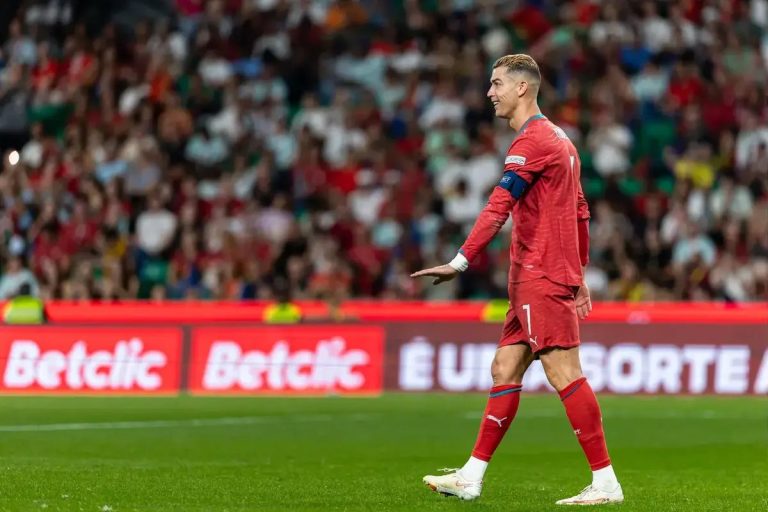
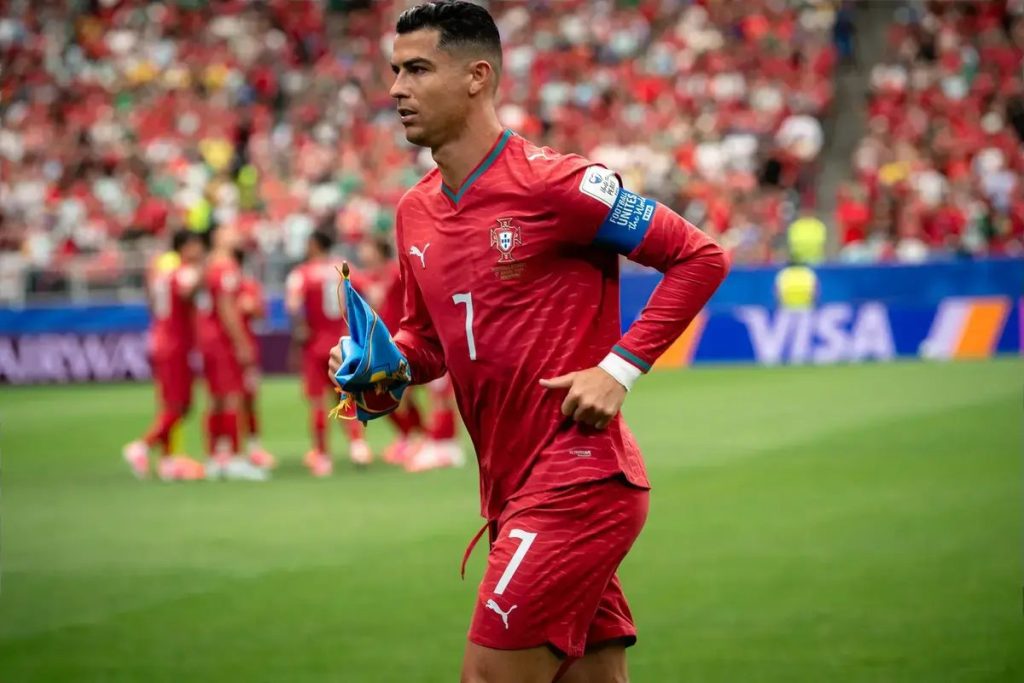
Cristiano Ronaldo is once again at the center of controversy following the debut of the National Team at the 2026 World Cup, with a performance that sparked a wave of fierce criticism from abroad. The 1-1 draw against the Democratic Republic of the Congo, an unexpected and unsatisfactory result for Portuguese fans, served as a pretext for the English newspaper The Independent to take aim at the Portuguese captain, describing the forward’s performance as “10 men and a statue.” The article’s ruthless and provocative headline encapsulates the feeling of disappointment and unease that is beginning to settle around Ronaldo’s presence in the starting eleven.
The meeting, held in New York, marked Portugal’s debut in this edition of the World Cup, and from the initial whistle, it was clear that all eyes were on Cristiano Ronaldo. However, contrary to expectations for one of the biggest stars in world football, the number 7 failed to make a difference. While Lionel Messi shone and scored a hat-trick for Argentina the day before, Ronaldo was subjected to a direct and unflattering comparison: “Everything that Lionel Messi did, Cristiano Ronaldo could not do better,” wrote The Independent early in its analysis. The newspaper emphasizes the contrast: “While Messi started the World Cup in a way that suggests his talent is timeless, his great rival began in a manner that shows his powers have diminished over time.”
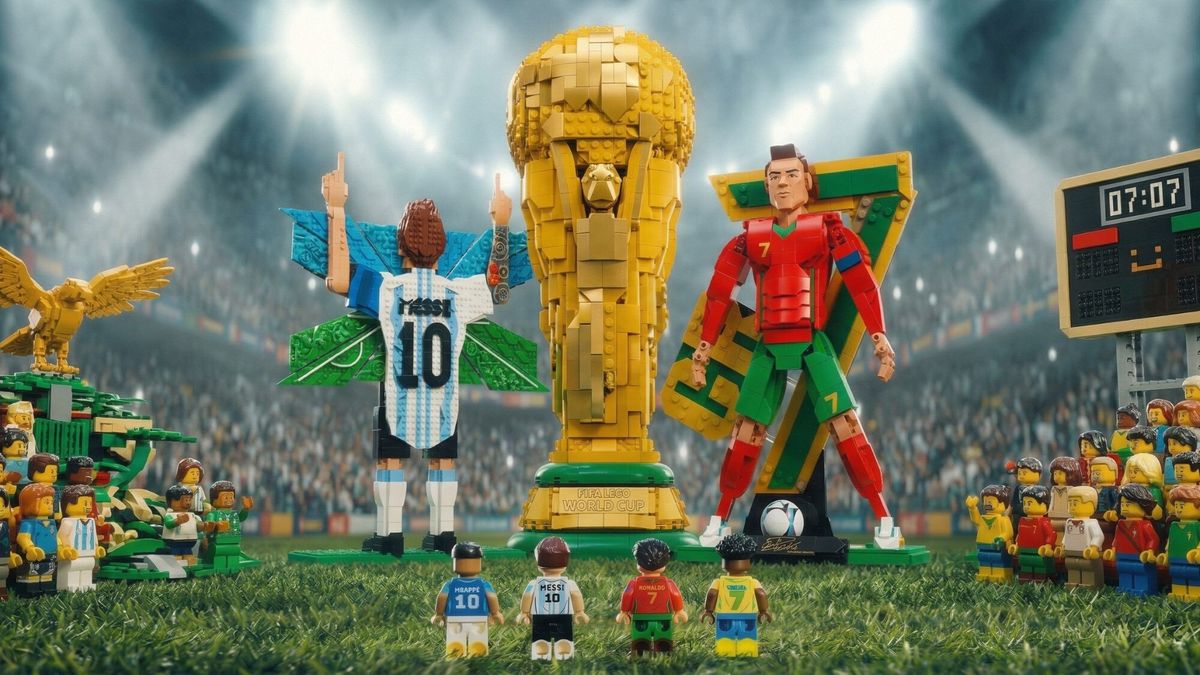
THE 2026 WORLD CUP LIVES ON WITH LEGO
The impact of these criticisms goes far beyond a simple assessment of the game. Portugal enters the World Cup with ambitions of victory, and after the disappointment at Euro 2024, the pressure on Roberto Martínez and his players is at its highest. The article from the British newspaper touches precisely on a sensitive point: the policy of building the team around Ronaldo may be costing the Seleção das Quinas dearly. “For the third consecutive time in a major tournament, the danger is that Ronaldo is holding Portugal back. The draw with the DR Congo highlighted the difficulties of trying to win a World Cup with a team of 10 men and a statue,” criticizes the publication, questioning the effectiveness of the national strategy.
In its assessment of the performance of the Portuguese captain, The Independent leaves no doubt about the author’s opinion. “Ronaldo’s impotence condemned Portugal to a draw. Portugal tried to break down a stubborn defense with a non-presence in the area.” The newspaper goes further, detailing the forward’s shortcomings: “He lacked the speed to attack the defenders’ backs and the movement to escape marking. He couldn’t press, stretch the defense, or draw opponents out of position. Instead, Ronaldo remained on the sidelines of the game. Even when a cross was directed towards what seemed like a typical Ronaldo goal, the scorer was, in fact, the small midfielder João Neves.” The numbers do not lie: three shots, none on target, and one play where he should have passed the ball to Bruno Fernandes – all factors that, according to critics, contributed to the disappointing result.
Ronaldo’s presence on the field for the entire 90 minutes also did not escape the sharp analysis of the English newspaper. “Ronaldo stayed on the pitch for the whole game. In a way, there is logic to this: why substitute a player with a record of 143 goals for the national team and nearly a thousand in professional football when his team needed a goal? He moved around so little that even a man in his forties wouldn’t have been exhausted,” the article notes, leaving open the possibility that Ronaldo’s status is overshadowing his sporting performance.
Criticism also extends to national team coach Roberto Martínez, whose management of the captaincy is described as overly permissive. “The impression is that he receives preferential treatment. The strange alliance between the captain and the coach means that decisions affect only the other players,” points out The Independent, suggesting that the technical leadership is held hostage by Ronaldo’s aura and media weight. The newspaper even questions whether Portugal would have benefited from a potential suspension of the forward after his red card against Ireland: “If Ronaldo were unavailable, Portugal would have been forced to explore life without him. They would have tried another striker or another way of playing.”
In closing, the article issues a stark warning about the path Portugal may be on if it continues to rely on its captain. “As in Euro 2024, Portugal risks sacrificing another opportunity for glory at the altar of his ego.” This accusation serves as a wake-up call for both the coaching staff and the fans: blind faith in Ronaldo may be hindering the renewal and evolution of the National Team.
Decisive matches are now ahead for Portugal’s aspirations in the 2026 World Cup, with increasing pressure on Roberto Martínez to make bold decisions and rethink Ronaldo’s role in the starting eleven. If performances do not improve, it is inevitable that critical voices will gain strength, potentially jeopardizing the captain’s immediate future with the national team. The debate is underway, and Portugal has little time to respond on the pitch, risking yet another talented generation squandering the long-cherished dream of world glory.
NOW YOU CAN FOLLOW THE WORLD CUP WITH ALL THE INFORMATION – HERE
Discover more from Apito Final
Subscribe to get the latest posts sent to your email.